Millions of monarch butterflies are taking off on one of nature’s most remarkable road trips. These tiny travelers are heading south across North America, and some could make a pit stop surprisingly close to home.
The eastern monarch butterfly migration is now gaining momentum across the United States and Canada. Many butterflies will travel thousands of miles before reaching the mountain forests of central Mexico, where they will spend the winter.
The trip can stretch close to 3,000 miles for monarchs starting in the northern reaches of their range. That is an astonishing distance for an insect that weighs less than a paper clip. Recent reports show the 2026 migration moving south through the Great Lakes region. Journey North says roost sightings have spread into Illinois, Iowa, and Indiana, while reports continue across Minnesota and southern Ontario.
Monarch Butterflies Are Gathering in Huge Roosts
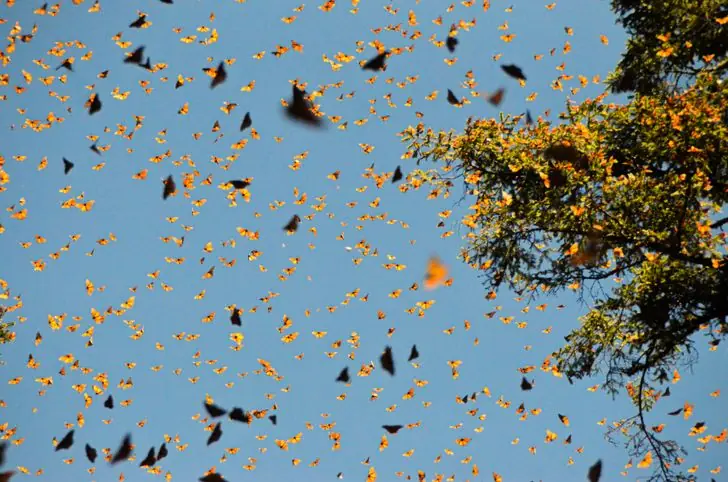
At night, they often gather together in trees to create temporary roosts. Some contain only a handful of monarchs, while larger gatherings can hold hundreds or even thousands of butterflies.
Journey North reported particularly strong roost activity across southern Minnesota and northern Iowa as the 2026 migration gathered pace. Southern Ontario has also produced numerous reports, giving researchers a clearer picture of the southward movement.
The sight can be easy to miss at first. Hundreds of monarchs may sit quietly with their wings folded, making a crowded tree look much less colorful than expected. That changes when the butterflies warm up and begin moving. Orange and black wings suddenly fill the air as the travelers prepare for another leg of their journey.
The roosts serve an important purpose during migration. Sheltered trees can protect monarchs from wind, while nearby flowering plants provide nectar that helps fuel the next day’s flight. Scientists also think gathering in groups may offer some protection from predators. Cold temperatures can leave monarchs sluggish and vulnerable, so spending the night together may provide safety in numbers.
The generation making this trip is also unusual. Most monarch generations live for only a matter of weeks, but the fall migratory generation can survive for many months. These long-lived monarchs delay reproduction while making the trip south. Their bodies instead put energy toward survival, migration, and eventually getting through the winter in Mexico.
Their 3,000-Mile Trip Ends in Mexico

Many spend winter within and around the Monarch Butterfly Biosphere Reserve. The region’s oyamel fir forests create the cool, moist conditions monarchs need to survive until warmer weather returns.
The forests protect the butterflies from harsh weather while keeping temperatures low enough to slow their metabolism. That helps monarchs conserve the fat reserves they collected during their long fall journey. Once settled, enormous numbers can cluster together on trunks and branches. The weight of densely packed monarchs can make tree limbs sag beneath them.
This year’s travelers are heading south after some encouraging news from Mexico. The eastern migratory population showed a substantial increase during the 2025 to 2026 overwintering season. Researchers found monarch colonies occupying 7.24 acres, or 2.93 hectares, of forest. That was 64% higher than the 4.42 acres recorded during the previous winter.
The figures come from the annual survey led by WWF Mexico and Mexico’s National Commission of Protected Natural Areas. Scientists measure the forest area covered by winter colonies rather than trying to count millions of individual butterflies. Nine colonies were documented during the latest survey. Three were located in Michoacán, and six were found in the State of Mexico.
However, during the 1996 to 1997 season, monarch colonies occupied about 18.19 hectares of forest, far beyond the 2.93 hectares measured last winter.
For people living along the migration route, fall can bring a rare chance to watch monarchs passing through. A backyard filled with late-blooming flowers may even become a tiny refueling station.