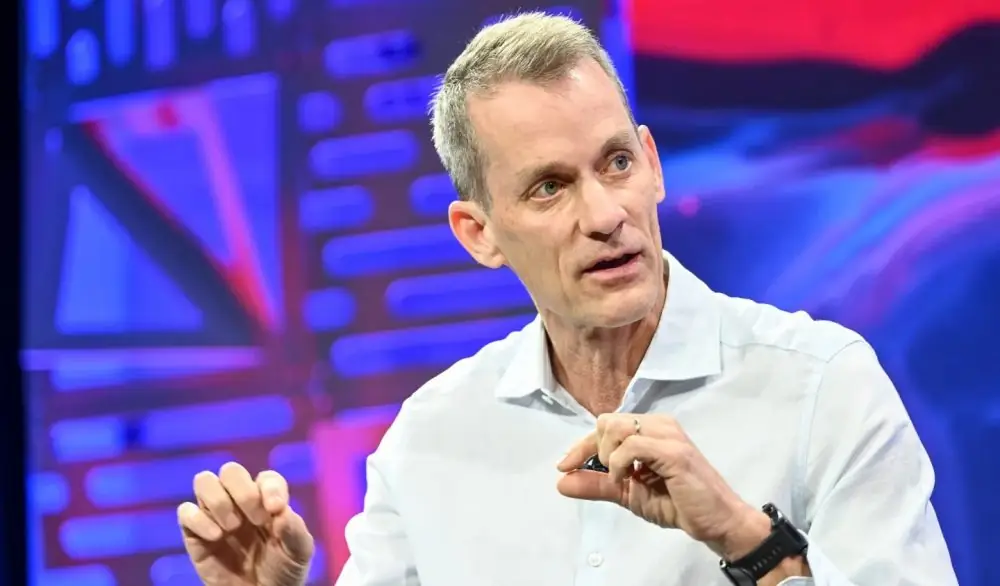
Jeff Dean leaving Google was never going to look like an ordinary executive departure. After nearly 27 years at the company, one of the most respected engineers in Silicon Valley has started something new, and the ambition is hard to miss.
His new company is called Discovery Loop. The AI startup wants to speed up scientific and engineering progress by automating much of the work involved in designing, running, and learning from experiments. In simple terms, Dean and his co-founders want AI to help researchers discover useful things much faster.
That would already make Discovery Loop interesting. The people building it, the investors backing it, and the reported valuation talks make the startup considerably harder to ignore.
Announcing Discovery Loop! I am very excited to announce that, along with my longtime friends and collaborators @Sanjay_Ghemawat, @OriolVinyalsML and @quocleix, we are founding Discovery Loop (@DiscoLoopAI), a Public Benefit Corporation whose mission is to automate machine… pic.twitter.com/ancoplyNvN — Jeff Dean (@JeffDean) August 5, 2026
Dean spent decades helping create the computing systems behind some of Google’s biggest products. Now he is taking that experience outside Google, but Alphabet is not exactly cutting ties. It is backing Discovery Loop as a founding investor, while Google Cloud is also involved as a partner.
Discovery Loop Has a Ridiculously Experienced Founding Team
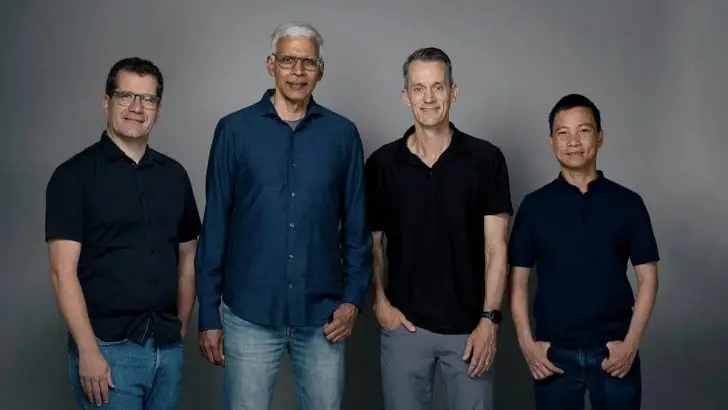
This gives the startup a founding team packed with experience in artificial intelligence and large-scale computing.
The four researchers spent years working together inside Google. Their careers touched technology behind Search, Ads, Gmail, large-scale infrastructure, machine learning, and the Gemini AI models. They are not simply executives who happened to work at a major technology company. They helped build important parts of its technical foundation.
Dean joined Google in 1999 as roughly its 30th employee. He later became one of the company’s most recognizable engineers and served as chief scientist. His work on large-scale computing and artificial intelligence also helped shape how Google handled enormous amounts of data.
His departure became official in early August 2026, ending one of the longest and most influential careers inside Google. The exit was emotional enough that a farewell event reportedly attracted around 1,500 people, far beyond the original expected attendance. Dean also spent hours responding personally to hundreds of goodbye messages from colleagues.
The company has been competing aggressively with OpenAI, Anthropic, Meta, and other AI labs while spending heavily on computing infrastructure. Losing four deeply experienced researchers at the same time creates a talent gap that is difficult to dismiss.
Discovery Loop Wants AI to Automate the Research Process
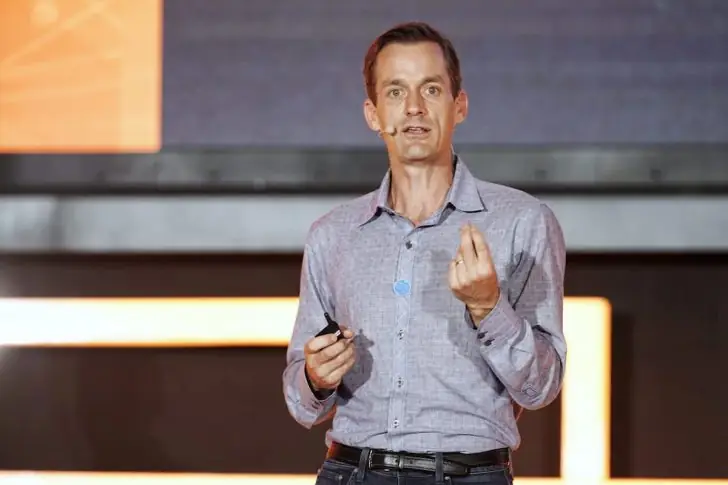
A typical researcher develops an idea, designs an experiment, runs it, studies the results, and decides what to test next. Discovery Loop wants AI systems to handle far more of that cycle automatically, allowing many experiments to run in parallel instead of waiting for humans to manage every step.
That could turn AI from a research assistant into something closer to an active research system. An AI could propose hypotheses, create experiments, evaluate the results, and use what it learns to design the next round.
The potential advantage comes from speed and scale. Human researchers have limited hours and laboratory resources. Software can work continuously, and sufficiently automated systems could explore thousands of possible ideas far faster than a traditional research team.
Discovery Loop plans to begin with machine learning research and engineering. That makes practical sense because the founders know the field extremely well, and improvements to their own AI systems could make the discovery platform itself more capable.
How Discovery Loop Would Work?
The company would essentially become its own first customer. It could use automated research to improve machine learning, then use those improved systems to automate more research. That closed cycle helps explain the “Loop” in the company’s name.
The founders eventually see applications well beyond AI research. Fields such as biology, drug discovery, chip design, clean energy, and other difficult engineering problems could benefit if automated experimentation becomes reliable enough.
However, investors are not waiting for Discovery Loop to become a mature company before showing interest. The startup is reportedly discussing a funding round of around $1 billion at a valuation near $10 billion, although Dean has not publicly confirmed those funding terms.
That is an extraordinary figure for such a young startup. A valuation around $10 billion would place Discovery Loop among the most richly valued new AI companies before it has had time to establish a major commercial business.